
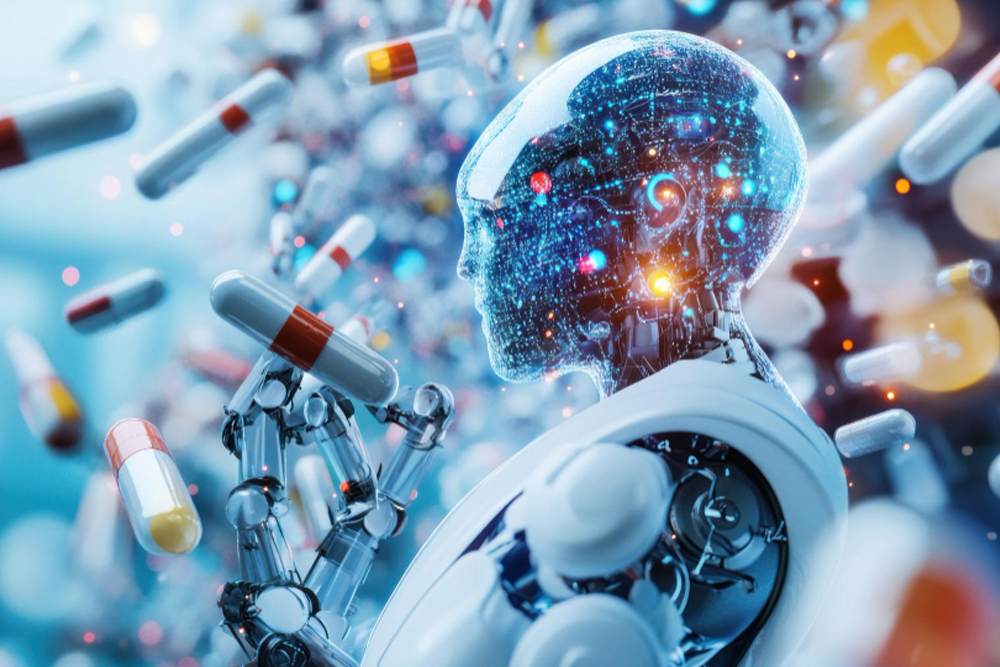
Artificial intelligence is transforming the pharmaceutical industry by significantly accelerating the drug discovery process. Traditionally, developing a new drug required years of laboratory experiments, high costs, and uncertain outcomes. Today, AI-driven approaches are changing this landscape by enabling researchers to analyze massive datasets, predict molecular behavior, and identify promising drug candidates in a fraction of the time.
Machine learning models can evaluate millions of compounds and predict their biological activity against specific targets. This reduces the need for extensive laboratory screening and helps researchers focus only on the most promising molecules. AI also enhances target identification, helping scientists understand disease mechanisms at a molecular level and uncover new therapeutic opportunities.
Another major advantage is in lead optimization, where AI algorithms refine molecular structures to improve effectiveness, safety, and stability. Additionally, predictive models such as ADMET analysis help assess toxicity and pharmacokinetics early in the development process, reducing late-stage failures.
By integrating computational chemistry, molecular modeling, and data science, AI is not just improving efficiency but also increasing the probability of success in drug development. As the technology continues to evolve, AI will play an even greater role in delivering faster, safer, and more cost-effective healthcare solutions worldwide.